The Hidden Danger of Using Chemical Drain Cleaners
Chemical drain cleaners look like a shortcut when a sink or tub backs up in Kingman. In the Mojave Desert climate and in older Mohave County housing, they often turn a simple drain cleaning into a costly pipe repair. The combination of 20 to 30+ grains per gallon water hardness from the Hualapai Valley basin, galvanized steel and cast iron legacy drains, clay sewer laterals along Historic Route 66, and caliche soils that shift during monsoon saturation creates a perfect storm where caustic drain products cause damage that is hard to see until the next backup. This article explains what actually happens inside pipes in Kingman, why chemical cleaners are risky, and how a professional diagnostic workflow clears the blockage without creating new problems. It also frames what Kingman homeowners and businesses should expect from a local authority service for drain cleaning and for any call labeled as a clogged pipe Kingman emergency.
Why chemical drain cleaners are a poor match for Kingman pipes
Most chemical drain cleaners use sodium hydroxide (lye), sodium hypochlorite (bleach), or a blend that reacts with water and organic matter to generate heat. Some “foaming” or “two-part” products also add aluminum powder to intensify the reaction. The heat and caustic pH help dissolve hair or food residue. In Kingman, that heat hits more than hair. It bakes dissolved calcium and magnesium from our extreme hardness onto the inside of the pipe. The residue forms a concrete-like layer of calcium carbonate scale. The reaction can also soften older pipe walls and degrade seals at joints. The end result is a temporary clear followed by a tighter choke point weeks later, plus long-term pipe damage that did not exist before the product went in.
Legacy drain materials are most vulnerable. Pre-1975 Kingman homes in the Andy Devine Avenue corridor and the White Cliffs area often use galvanized steel drain lines. Galvanized steel already corrodes from the inside out in our high-mineral water. The interior rust layer and mineral scale can reduce a three-inch nominal drain stack to less than one inch of open diameter. Caustic cleaners attack the remaining zinc coating and speed up corrosion. In 1930s through 1950s Route 66-era construction around Downtown Kingman and the Beale Street Historic District, the main sewer lateral is often clay tile. Clay tile fails at the joints. Chemical cleaners that sit in the pipe because of a clog reach those joints at full strength, soften any old gasket material, and leak into surrounding caliche soil where desert trees are already searching for moisture. Root intrusion follows fast.
Plastic drains do not escape risk. ABS and PVC are common in post-1980 work across Valle Vista, the Airway corridor, and the Stockton Hill Road corridor. Caustic chemicals can distort plastic traps if the product sits and heats inside the P-trap (the U-shaped section under the sink that holds water to block sewer gas). The same heat can soften or blister plastic drain walls. In showers and tubs, chemical residue can sit on finishes and stain or etch them. In kitchen sinks, chemical cleaners can corrode or crack garbage disposal seals.
What chemical heat does in extreme hard water
Kingman water measures 20 to 30+ grains per gallon and 340 to 510+ ppm calcium carbonate equivalent. When caustic cleaners generate heat in that water, dissolved minerals drop out fast. They stick to the hot pipe walls as a hard scale. Technicians see this effect during camera inspections. A Ridgid SeeSnake video camera shows chalky white ridges inside older cast iron and galvanized lines that thicken after each chemical treatment. The next clog grabs these ridges like Velcro. That is why one treatment seems to work, two seem to work less, and the third is followed by a drain emergency.
Why this matters for Kingman homes and businesses
Pipe condition and soil movement trends in Mohave County make shortcuts risky. Kingman sits at 3,330 feet at the foot of the Hualapai and Cerbat Mountains. Caliche soils swell during monsoon saturation from July through September. That motion opens emergency drain cleaning clay sewer joints in older neighborhoods from Downtown Kingman to the Andy Devine Avenue corridor. Desert mesquite and palo verde send roots into any gap. Chemical products do nothing to remove roots, grease blankets, or mineral scale. They only attack the soft clog near the fixture. If the problem sits in the main line under the yard, the chemicals soak and sit. That is where they damage pipe walls, gaskets, or cleanout threads.
Another local factor is age. Many Kingman homes near Historic Route 66 still connect to clay or early cast iron laterals. Those laterals are now 70 to 95+ years old. Many 1960s and 1970s homes in White Cliffs and the Hilltop area still have galvanized steel drain stacks. Those stacks show heavy internal rust, egg-shaped cross sections, and seams that weep under pressure. Chemical heat can push a marginal seam into a leak. In Valle Vista and Golden Valley, plastic drains are common, but the hardness and kitchen grease still cause stubborn blockages. Chemical cleaners coat the grease and leave a sludgy layer behind that re-bonds to the pipe as water cools.
A shareable local finding
In the Andy Devine Avenue and Beale Street corridors, technicians have documented original three-inch galvanized drain stacks with less than one inch of effective diameter after decades of rust scale and mineral buildup. On video, the camera head barely passes. Chemical drain cleaners do not remove that scale. They accelerate it by baking new mineral onto the old mass. Only mechanical methods that scrape or jet the inside wall, or targeted pipe replacement, restore capacity.
Common Kingman clog patterns seen on camera
Technicians in the 86401 and 86409 zip codes see a predictable mix of residential and commercial blockages:
- Grease blankets in kitchen lines from homes and Route 66 corridor restaurants. Grease cools and adheres to pipe walls. Chemical cleaners ride on top and often never contact the blockage. Hair and soap scum mats in shower and tub drains. Caustic products appear to dissolve hair, but the remaining mat loosens and reforms downstream, often at a trap or coupling lip. Mineral scale and rust in galvanized and cast iron lines. Scale creates a rough interior surface that traps every new particle. Chemicals cannot smooth or remove this substrate. Root intrusion through clay joints near yards with desert trees. Only cutting tools or hydro jetting at 4,000+ PSI remove root growth from the full circumference of the pipe. Main line bellies or offsets from caliche soil movement, especially after monsoon events along Rattlesnake Wash. Standing water in a belly dilutes chemicals so they never reach full strength at the obstruction.
These patterns explain why a clogged pipe Kingman call that starts as a slow sink can end as a main line service. A proper diagnosis prevents wasted time and damage.
How a professional Kingman drain cleaning actually protects the pipe
A professional workflow begins with mapping the problem, not pouring a guess. A Plumbing by Jake technician locates the nearest cleanout and runs a Ridgid SeeSnake video camera through the drain line to document where the blockage is, what type it is, and what the pipe wall looks like. The camera head is 5/8 inch with self-leveling capability and a locator that marks depth and distance. Video shows if the issue is a soft clog at a P-trap, a hard grease blanket at a coupling, a root mass in a clay joint under the yard, or a mineral choke point in a galvanized bend. That level of certainty prevents the wrong tool from touching the line.
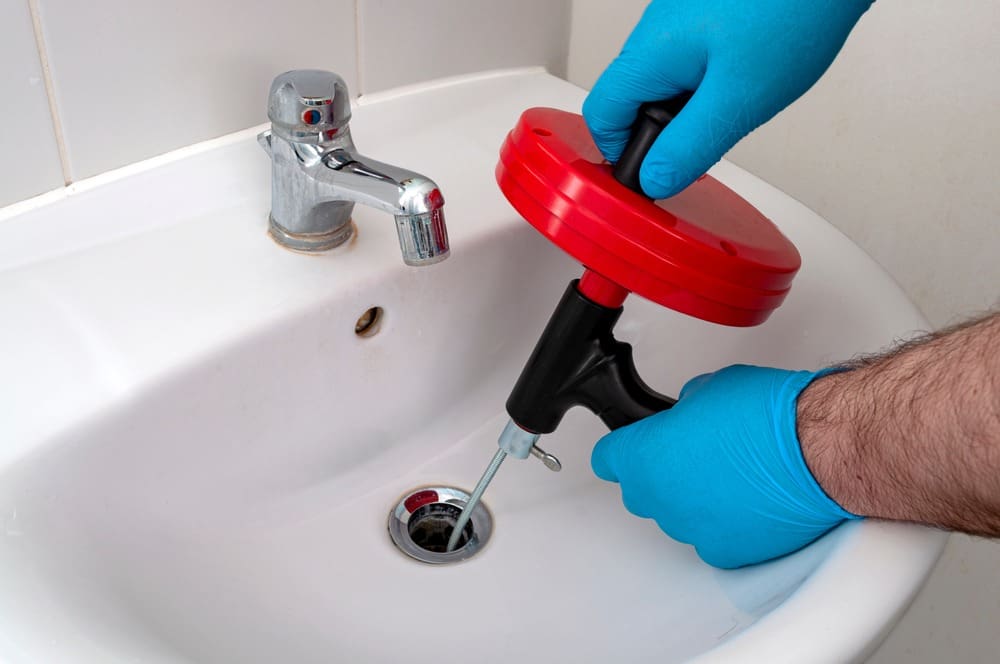
For routine residential clogs near the fixture, a Spartan Tool electric drain auger clears the blockage with mechanical cutting. The cable head is sized to the pipe so it cleans without scarring the wall. For stubborn grease, mineral scale, or roots, hydro jetting at 4,000+ PSI scours the inside circumference of the pipe with a rotating nozzle. Jetting restores the inner diameter where chemicals cannot. Technicians also descale older cast iron with specialized heads that scrape oxidized iron and attached mineral without puncturing thin sections. If the camera reveals structural damage that no amount of clearing can fix, the conversation moves to repair options before a flood event occurs.
When trenchless repair makes more sense than excavation
If a clay sewer lateral shows joint separation, cracks, or root intrusion that would return after any clearing, trenchless repair protects yards, driveways, and sidewalks. Perma-Liner cured-in-place pipe (CIPP) lining pulls a resin-saturated liner through the original clay path. The liner inflates against the old wall and cures into a new structural pipe with a smooth interior. Lining can rehabilitate a failed lateral under a mature landscape in Downtown Kingman or a driveway off Hualapai Mountain Road without open trench work. If the old line has collapsed sections that will not pass a liner, pipe bursting replaces the line by pulling a new pipe through the same path while fracturing the old one. Both methods restore capacity and shut roots out. Camera inspection confirms the result.
How chemical cleaners create hidden liability in businesses
Food service and hospitality operations along the Route 66 Mother Road see heavy kitchen use and grease. Staff sometimes reach for a jug during a rush. In a commercial setting this is riskier. If a chemical cleaner spills or splashes, it can injure staff or corrode stainless surfaces. If it sits in a trap under a triple compartment sink, it can distend the plastic. If it reacts with residual sanitizer, it can release fumes. A camera-backed drain cleaning avoids all of that. Hydro jetting at 4,000+ PSI removes grease layers from the full pipe circumference and restores flow without chemicals. It also produces documentation that a manager can show during an inspection.
For facilities in the Kingman Industrial Park south of the Airport, chemical cleaners also add risk with stormwater and ADEQ compliance. A jetting and camera inspection record helps show good faith maintenance if an ADEQ review questions grease control or pre-treatment. Chemical residues dumped in mop sinks or floor drains can cause issues in separators and interceptors. A recurring hydro jetting schedule for high-use lines prevents emergency shutdowns during peak hours.
What the Arizona Plumbing Code expects, and why that matters
Arizona adopts the 2018 International Plumbing Code with state amendments. The code expects that drainage systems remain free-flowing, vented, and gas-tight. It also requires that any repair returns the system to code-compliant function. Chemical drain cleaners that distort plastic P-traps, soften gaskets, or corrode metallic drains do not move a property closer to compliance. In some cases, the damage forces a replacement that could have been avoided with a camera-directed clearing. Licensed contractors are accountable to the Arizona Registrar of Contractors. Plumbing by Jake holds Arizona ROC #296317 with residential (C-37R) and commercial (L-37) endorsements, which means every drain cleaning or repair must meet code standards and pass inspection if a permit is involved.
Seasonal triggers for clogs across Mohave County
Drain emergencies in Kingman spike in two windows each year. During summer monsoon season, flash flooding on channels like Rattlesnake Wash saturates caliche soils. The soil swells and shifts laterals just enough to misalign clay joints. Roots pepper these gaps within a single growing season. During winter, overnight lows drop below 32 degrees at 3,330 feet. Outdoor lines with shallow burial or exposed sections see reduced flow as fats and oils congeal. Homeowners then pour boiling water and chemicals that do not remove the underlying mass. The cycle repeats until a full main line blockage forms. A camera-first workflow breaks that cycle and shows the real cause.
How technicians verify venting and traps during a service visit
Partial or recurring clogs sometimes come from vent problems. The vent stack equalizes air pressure in the drain so water does not siphon traps dry. Technicians verify venting during a slow-drain call by listening for gurgling and by checking trap seals. A gurgling toilet when a nearby tub drains points toward a vent or main line restriction. Chemical cleaners do not fix a vent. The SeeSnake camera can view the stack from the roof if needed and spot a bird nest, a collapsed liner, or a joint offset. Once the airway is clear, water moves without pulling trap seals, which also eliminates foul odors.
Why hard water makes recurring clogs more likely in Kingman
Every time hot water runs in Kingman, dissolved minerals precipitate onto hot surfaces. In drains, that scale forms a rough interior. Think of it as sandpaper compared to smooth ABS or PVC. Every soap bubble, hair strand, or fat globule grabs the roughness. Over years, the buildup narrows the path. In older cast iron, the iron oxidizes and balloons into a lumpy interior surface. The result is predictable. A home in 86401 with original galvanized or cast iron drain stacks will experience more frequent slow drains than a similar home replumbed with plastic. Chemical cleaners cannot reverse decades of mineral and rust buildup. Mechanical descaling and, when warranted, targeted pipe replacement are the solutions that hold.
Evidence from water heaters that confirms the hardness story
Kingman’s hardness shortens water heater life and proves what happens in pipes. The sacrificial anode rod, which is the magnesium or aluminum rod inside the water heater tank that corrodes in place of the steel tank lining, protecting the tank from the dissolved minerals in Kingman's hard water, consumes in 2 to 4 years here. In moderate water markets, it lasts 6 to 8. Homeowners in White Cliffs who drain a 10-year-old tank often find inches of hardened sediment on the floor. That same calcium carbonate settles in drains when chemical cleaners heat the water. The pattern across fixtures tells the same story countywide.
How a camera-backed quote protects the homeowner
Upfront flat-rate pricing makes sense only when the scope is clear. A camera inspection with a Ridgid SeeSnake turns guesswork into a measured repair. The technician can show the blockage, measure its distance from the cleanout, and identify the pipe material. If the line is ABS with a soft clog, a Spartan Tool auger solves it fast. If the line is clay with root intrusion, the price shifts to hydro jetting and a root control plan. If the line is galvanized with heavy corrosion, the conversation moves to replacement of the worst section. The homeowner sees the video and chooses a durable solution, not another temporary clear that returns next month. This is the difference between a lasting drain cleaning and a cycle of calls.
What to expect during a professional drain visit in Kingman
The service starts with access. The technician finds the main sewer cleanout or opens a fixture trap if the clog is localized. The camera goes in. The line is mapped. If the blockage is light and near the entry, a cable auger clears it in minutes. If grease blankets the line, hydro jetting follows. In a home along Hualapai Mountain Road with large desert trees, the technician expects roots in clay joints and plans a jetting pass that cuts root fibers from all sides. After clearing, the camera runs again to confirm a full opening. The final video shows if the pipe wall is smooth, rough with scale, or structurally compromised. If the line needs repair, options are shown and priced before any change in scope. If the line looks good, the technician may recommend an enzyme maintenance product such as Bio-Clean to reduce organic buildup without heat or caustic reaction. No chemical drain cleaners are used.
Special cases seen around Kingman Regional Medical Center and nearby offices
Medical and office buildings near Kingman Regional Medical Center often have long horizontal runs and many lavatories tied to common stacks. A single blockage can slow multiple fixtures. Chemical cleaners from multiple sinks concentrate in the blockage zone and cause pipe damage. Hydro jetting restores flow evenly across the branch lines and protects building finishes. Video documentation supports property management decisions and helps schedule future maintenance before the next slowdown. The same approach applies to multi-tenant properties near Kingman Airport and the Kingman Industrial Park area.
Clogged main line signals that Kingman property owners should not ignore
Several drain symptoms suggest a main line problem rather than a single fixture clog. In the 86402 and 86413 zip codes, technicians often get calls for a tub that backs up when the washer drains, or a toilet that gurgles when the bathroom sink runs. Those cross-symptoms come from a blockage downstream of where the branch lines merge. Chemical drain cleaners poured in a single fixture cannot reach the blockage with any power in that layout. They pool, cool, and then damage the wrong section of pipe. A camera inspection from the cleanout and a main line clearing is the correct workflow.
- Multiple slow drains at the same time in different rooms. Gurgling in a toilet when a tub or sink drains. Sewage odors near floor drains or low fixtures. Water around a floor drain during laundry discharge. Overflow in a basement or lower-level shower during heavy rain.
Any of these signs in a clogged pipe Kingman situation point straight to a camera-first main line service, not to a chemical product.
The trenchless safety net for Route 66-era laterals
Many homeowners worry that a failed clay lateral means a destroyed lawn or a broken driveway. Trenchless methods change that equation. CIPP lining with Perma-Liner rebuilds the inside of the pipe. Pipe bursting replaces a failed lateral with a new pipe along the same path. Excavation is still needed at access pits, but yards and hardscape remain largely intact. For historic properties in the Beale Street Historic District, this protects heritage trees and avoids disruption on narrow lots. The smooth interior of a lined or new pipe also improves hydraulic capacity and reduces future clog risk. The choice often costs less than a full dig and restore project when landscaping and concrete repair are included.
Why hydro jetting is safe when performed by licensed pros
Hydro jetting uses water at 4,000+ PSI from a specialized machine to scour the pipe wall. The nozzle directs rear jets to pull the hose forward and front jets to cut the blockage. In skilled hands, the jetter clears grease, roots, and mineral scale without removing pipe wall. It also cleans the full circumference, not just a channel. Licensed technicians trained on Ridgid, General Wire Spring, and Spartan Tool equipment choose the right head and pressure for the pipe material and size. The method avoids the heat shock and chemical attack that damage older lines. It also leaves no hazardous residue in traps, sinks, or interceptors.
A note on homeowner safety and warranties
Chemical drain cleaners create safety issues that go beyond plumbing. They can burn skin, damage eyes, and produce fumes when mixed with other cleaners. If a jug sits under a sink and leaks, it can corrode cabinet hardware and stain finishes. In homes with garbage disposals, using chemical drain cleaners can void disposal warranties because the seal damage is a known outcome. If a cleaner sits in a shower drain and damages the finish, repair often costs more than a professional clearing. A drain cleaning that relies on camera inspection, mechanical cabling, and hydro jetting keeps both the people and the property safe.
Local examples that illustrate smarter choices
Consider a White Cliffs homeowner with a slow kitchen sink. The line has a flat section under a slab and has built up a quarter inch of hardened grease over time. A chemical cleaner will sit on the top of the grease and never touch the layer bonded to the pipe. A hydro jetting pass removes the entire layer, including the stubborn band at the coupling lip that collects every new particle. The fix lasts because the interior wall is smooth again.
In Downtown Kingman near Locomotive Park, a 1950s home still connects to a clay lateral. Desert mesquite roots have entered a separated joint ten feet from the street. Chemical products cannot reach the joint with any strength. Mechanical cabling can open a channel, but roots will return. Hydro jetting clears the joint. CIPP lining then seals it for the long term without tearing up the yard or the sidewalk along Historic Route 66.
In Valle Vista, a homeowner with plastic drains suffers recurring tub clogs. The camera shows a hair mat that re-forms on a rough spot where construction debris nicked the pipe. Chemicals melt some hair and leave residue. A cautionary auger pass and a smoothing jetting run clear the nick and stop the recurring snag. Enzyme maintenance with Bio-Clean keeps organic buildup low without heat or caustics.
Why commercial kitchens along the Route 66 corridor should avoid chemicals
Restaurants and cafes near the Route 66 Mother Road often have grease interceptors and long runs to the main. Chemical drain cleaners poured into a fixture can react with hot water, produce steam bursts, and damage seals. The residue ends up in the interceptor, where it can upset function and lead to costly pump-outs. Hydro jetting scheduled during off-hours clears grease blankets from the full pipe diameter and documents the condition with video. Managers get predictable flow and a record that supports maintenance schedules and compliance. For late-night emergencies, quick jetting service keeps kitchens open without exposing staff to chemical hazards.
What makes a clogged pipe Kingman call different from other Arizona markets
Hardness and elevation change the playbook. In Phoenix or Tucson, hard water is a factor, but many neighborhoods do not have the same mix of galvanized, cast iron, and clay drains seen in Kingman’s Route 66-era housing. Kingman’s 20 to 30+ GPG hardness, freeze-thaw winters at 3,330 feet, and caliche movement during monsoons stress drains in ways that low elevation markets do not see. A method that seems to work elsewhere, like dumping chemicals into a sink or tub, causes more damage here. The right approach in Mohave County uses tools that can see and resolve the specific local failure modes: camera inspection, mechanical cabling with Spartan Tool augers, hydro jetting at 4,000+ PSI, and trenchless repair where needed.
Why licensed, insured service matters
Drain cleaning that avoids damage and meets code requires training and accountability. Arizona ROC #296317 licensure confirms that Plumbing by Jake has both residential and commercial endorsements and operates bonded and insured. In practice, that means a camera finds the issue before a tool touches the line. It means the technician who recommends hydro jetting knows how to select the correct nozzle and pressure for a badly scaled cast iron or a fragile galvanized bend. It means a Perma-Liner CIPP lining option is offered when a clay joint will continue to fail. It also means written pricing before work begins and documentation after work completes. That is how a local authority service protects a property rather than gambling with chemicals.
Serving Kingman neighborhoods with local insight
Plumbing by Jake serves the full Kingman area from the headquarters at 3270 Kino Ave #1 in 86409. Calls come from Downtown Kingman and the Beale Street Historic District where clay laterals and cast iron stacks are common, from White Cliffs where galvanized drain corrosion shows up in simultaneous slow fixtures, from Valle Vista where plastic lines pick up hair and soap scum, and from the Hualapai Mountain Road corridor where tree roots search aggressively for moisture in caliche cracks. The team also handles commercial calls in the Kingman Industrial Park and along the Stockton Hill Road corridor, and covers Bullhead City, Lake Havasu City, Fort Mohave, Golden Valley, and Mohave Valley. The same diagnostic workflow applies across all of Mohave County. The local difference is knowing the housing eras, the neighborhood pipe materials, and the soil movement patterns that shape each service call.
The cost of “cheap” drain fixes in Mohave County
A jug of cleaner appears less expensive than a professional service. In Kingman, it often sets up the next and more expensive failure. Chemical heat bakes new mineral onto old scale. Caustics thin already corroded galvanized walls. Gaskets soften and start to seep. A disposal seal fails. A trap distorts. When the next flush sends water into the stressed section, a leak appears in a cabinet or a ceiling. That escalation costs more than a camera-backed drain cleaning would have cost at the start. Property managers across 86401 and 86409 know this cycle well. Breaking it with a documented, mechanical clearing saves money over a season, not just a single call.
What to request when booking service for drain cleaning
Ask for a video camera inspection at the outset. Ask whether hydro jetting is available at 4,000+ PSI for grease or root problems. Ask whether the service includes a second camera pass after clearing. Ask for a written flat-rate price before any work begins. Ask whether trenchless options exist if the camera shows a failed clay joint or a collapsed section. Each of these requests fits a clogged pipe Kingman scenario and leads to a durable result that chemical products cannot deliver. The goal is to fix the problem once, protect the pipe, and document the condition for future reference.
Kingman’s extreme hardness is the hidden force behind many “mystery” clogs
It is worth repeating because it drives so many calls. Kingman groundwater from the Hualapai Valley basin consistently measures 20 to 30+ grains per gallon and 340 to 510+ ppm calcium carbonate equivalent, among the highest levels in Arizona. The dissolved minerals precipitate onto hot surfaces during every cleaning cycle, every shower, every dishwash run. In drains, they create a rough interior that holds new debris. In the presence of chemical heat, they set like plaster. This is why chemical products are the wrong tool in Mohave County. They deepen the problem lane. Tools that physically remove grease, roots, and scale are the right lane.
Final word for Kingman property owners and managers
Chemical drain cleaners promise speed. In Kingman’s climate, soil, and pipe mix, they deliver heat damage, mineral baking, and short-lived results. A camera-first workflow with mechanical cabling and hydro jetting provides a durable fix that protects pipe walls and documents actual conditions. For older homes near Historic Route 66 and along Andy Devine Avenue, that approach can also reveal when a trenchless CIPP lining avoids excavation. For kitchens and businesses, avoiding chemicals protects staff, surfaces, and compliance. It is the smarter path in Mohave County’s extreme hard water environment.
Call for professional drain cleaning in Kingman and Mohave County
For any clogged pipe Kingman emergency or slow drain that keeps returning, Plumbing by Jake provides camera-backed drain cleaning across all Kingman zip codes 86401, 86402, 86409, and 86413, and throughout Bullhead City, Lake Havasu City, Fort Mohave, Golden Valley, and Mohave Valley. The team uses Ridgid SeeSnake video camera inspection, Spartan Tool augers, and hydro jetting at 4,000+ PSI to clear grease, mineral scale, and root intrusion without chemical damage. Arizona ROC Licensed (ROC #296317), bonded, and insured. Upfront flat-rate pricing is presented in writing before any work begins, with no hidden fees. Same-day service is available, with 24/7 emergency plumbing dispatch and a show up on time guarantee. The 100% satisfaction guarantee means the job is not done until it is done right at no additional cost. For precise, professional drain cleaning that fits Kingman’s water and soil conditions, call (928) 615-8228.
Plumbing by Jake
Professional Plumbing Services